

A study published in the journal Frontiers in Aging tells us that the trick to slow down aging is to use gadgets less. The researchers have discovered that excessive exposure to blue light from gadgets can harm skin appearance and health.
Oregon State University scientist Jadwiga Giebultowicz said that exposure to blue light from cell phones, computers, and other gadgets “may have detrimental effects on a wide range of cells in our body, from skin and fat cells, to sensory neurons.”
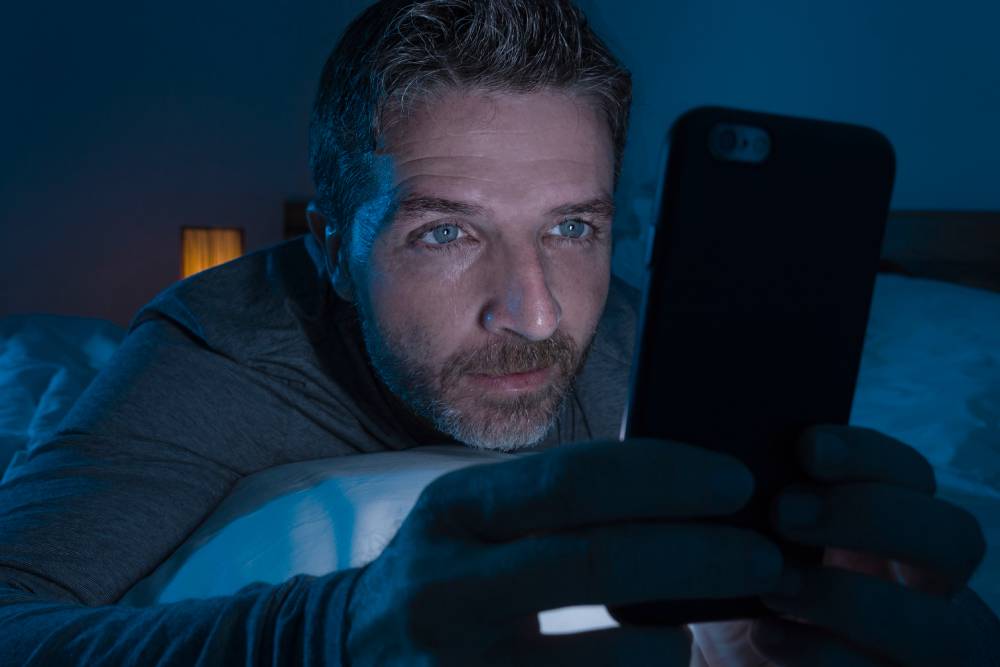
The Effects of Blue Light
“Our study suggests that avoidance of excessive blue light exposure may be a good anti-aging strategy,” Giebultowicz stated. In his research, they studied how blue light that permeates almost all areas of artificial illumination is a potential health hazard.
Ultraviolet (UV) rays of the sun are harmful for the skin and health. But we are only exposed to it during the daytime and tend to take precautionary steps to avoid being affected. On the other hand, today, we use various devices throughout the day and night and are continually exposed to blue light.
We are constantly exposed to blue light through LED lighting. From phones to television, there is no escaping ambient light when we are awake. Giebultowicz asserted that blue light can have a detrimental effect on the cells in our body — from skin to sensory neurons.
On a cellular level, aging occurs when cells stop repairing and producing new healthy cells. When cells stop doing these functions, they are more likely to self-destruct, which affects the entire body. Not only does it impact one’s appearance but this is also why the elderly take longer to heal and their bones and organs begin to deteriorate.
Past research has revealed that acute blue light exposure can lead to oxidative stress and death of retinal cells. In the study, Giebultowicz found that the “levels of specific metabolites – chemicals that are essential for cells to function correctly – are altered in fruit flies exposed to blue light.”
Light Exposure and a Heavy Penalty
To study the effect of blue light, researchers compared the levels of metabolites in flies exposed to blue light for two weeks to those kept in complete darkness. The researchers at Oregon State University successfully proved that fruit flies exposed to light activate their stress protective genes, while those kept in constant darkness lived longer.
The researchers pointed out that metabolites are an essential indicator of cell function. Metabolites are required to help the body break down food, drugs, or chemicals. This process called metabolism makes energy, and materials needed for growth, reproduction, and health.
During the course of the study, dramatic metabolic rearrangements were observed in heads of flies kept in blue light for 14 days, including highly elevated levels of succinate but reduced levels of pyruvate and citrate, suggesting impairments in energy production. These flies also showed an onset of neurodegeneration and the resulting analysis detected significantly reduced levels of several neurotransmitters including glutamate and Gamma-aminobutyric acid (GABA), suggesting that blue light disrupts brain homeostasis.
The recorded changes suggest that the cells have been operating at suboptimal levels and does not just accelerate aging, but in severe cases even cause an early death. The researchers used flies for the study as the signaling chemicals in humans and flies are the same.
Giebultowicz shared that he hopes future studies will look into the direct impact of blue light on the human brain. He added, “Now we’re reporting that the damaging effects of blue light on the flies are strongly age dependent – the same length of exposure to the same intensity of light decreases lifespan and increases neurodegeneration more significantly in old flies than in young ones.”


