

On Tuesday, Microsoft announced that it is partnering with Kawasaki Robotics on a new project. Microsoft selling metaverse to Kawasaki to build robots further blurs the line between the real and virtual worlds.
Microsoft HoloLens and the Metaverse
Kawasaki’s industrial metaverse will feature a factory floor where workers will wear a HoloLens headset to help with production, repairs, and managing supply chains. This will be used to help build robots for the floor. The Microsoft HoloLens is a pair of mixed reality lenses manufactured by the tech company. The HoloLens 2 Emulator requires Windows 10 update or higher to run. The Microsoft HoloLens currently retails for around $3,500.
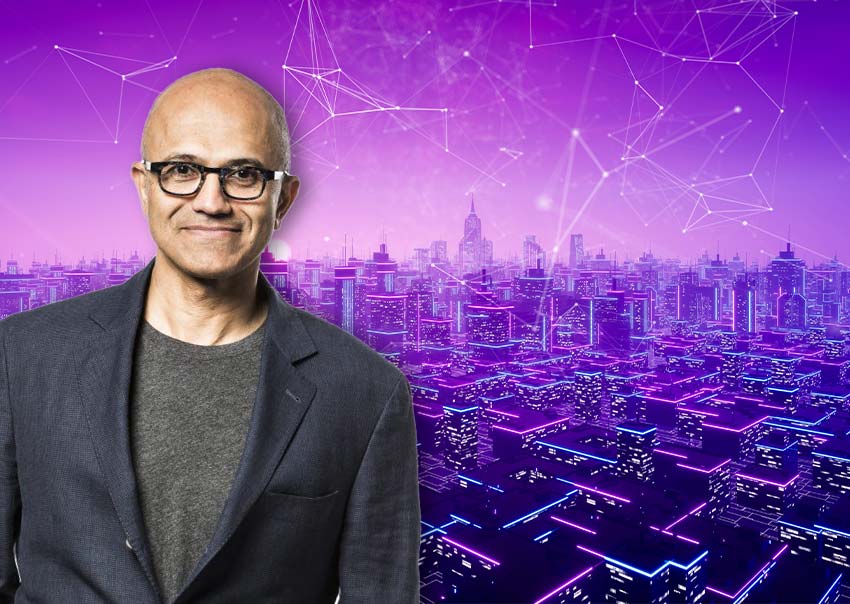
Microsoft is convinced that this move will help it create a “digital twin” of a workspace. The company believes that it can also help speed up day-to-day processes as people can walk each other through the requirements with the help of Microsoft HoloLens instead of waiting for someone in real life. The HoloLens headset will allow workers to chat with colleagues and customers and guide them to solutions using augmented reality visual illustrations.
Microsoft’s corporate vice president of mixed reality, Jessica Hawk, recently told CNBC that the metaverse will change how people function across a variety of devices and platforms.
Meta Inc., released an app that lets people hold meetings in virtual reality, which enhances the experience for remote workers. It appears that the metaverse will be more useful for business applications than as an entertainment avenue. Meta’s upcoming mixed reality headset is expected to cost much more than its $299 virtual reality headset.
Metaverse for business apps could bridge the gap between remote workers and help power a new era in doing business.
The Metaverse Economy
Research firm Gartner recently predicted that 25% of people will spend at least one hour a day in the metaverse by 2026.
Microsoft CEO Satya Nadella believes the tech company should combine its strengths through Xbox, HoloLens, and Azure cloud services to help the company harness the true potential of the metaverse.
Combining virtual reality with augmented reality enables the user to have a more immersive, realistic digital experience that feels wholesome and engaging. Although one cannot taste or smell something in the metaverse, going through the motions gives the user a pretty good idea of what to expect in real life. For people who do not want to replicate it in real life, experiencing it in the metaverse can be a decent substitute to satiate their curiosity. Its immersive experience lets the content creators live the life they dream of for a fraction of the cost.
Companies have recognized people’s desire to experience a wide variety of things without having to leave their comfort zones. This is why they are investing in blockchain, augmented reality, artificial intelligence, the Internet of Things, and 3D reconstruction to power the metaverse, make it bigger and better.
The metaverse ecosystem helps redefine digital experiences with the use of augmented reality and virtual reality. The possibilities are endless as businesses wake up to its true potential. From entertainment to work, the metaverse blurs the gap between make-believe and real. This can be especially useful for people collaborating on projects from different parts of the world. Video games use this to promote teamwork in a game. Big tech companies can customize their metaverse economy to suit a company’s business or project-specific needs.
A fully realized metaverse will support collaborative environments that use technology to simplify complex tasks and use real-life scenarios to build a better world. Microsoft selling metaverse to partner firms is the step in this direction, as we build a near-perfect world, albeit virtually, that can slowly be replicated in real life.


