

A group representing General Motors, Toyota Motors, Volkswagen and other major automakers expressed their displeasure over a $430 billion bill approved Sunday by the US Senate. The automakers pointed out that the proposed tax requirements will put achieving US EV adoption targets for 2030 in jeopardy.
The new bill creates a new tax credit for EVs and ignited strong protests from automakers. The automakers warned that the bill would disqualify most EVs from the $7,500 tax credit for US buyers.
The EV Tax Credit Bill
“Unfortunately, the EV tax credit requirements will make most vehicles immediately ineligible for the incentive,” said the Alliance for Automotive Innovation’s chief executive, John Bozzella, adding the bill “will also jeopardize our collective target of 40-50% electric vehicle sales by 2030.“
As per the new bill, EVs must be assembled in North America to qualify for the tax credit. This feature by itself will make most EVs ineligible as soon as the bill goes into effect. The Senate has also added other clauses to discourage automakers from using auto parts made in China and to become self-reliant. The bill mandates phasing out Chinese materials in certain percentages in favor of North American-sourced battery components. Furthermore, after 2023, vehicles containing Chinese components will be ineligible for tax credits while severe restrictions will come into force for sourcing of critical minerals. The bill recommends sourcing the required minerals from the US or a country with a free trade agreement with America.
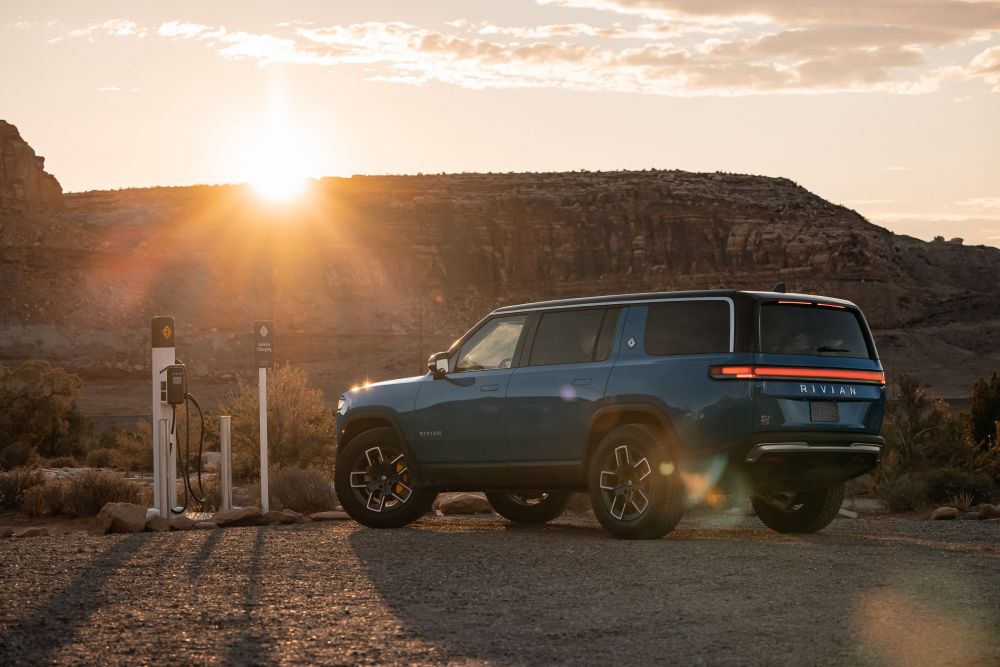
The mineral and material guidelines will go into effect in 2024. The vehicles must have an MSRP of under $55k for cars and $80k for SUVs, vans, and trucks, otherwise they do not count, excluding several Tesla configurations and trucks like the USA-made Rivian. Also, buyers can only take advantage of the credit if they make under $150k a year – which will likely affect some of these higher-end car buyers.
Senator Joe Manchin, who pushed for the restrictions, said that EVs in the US must not depend on foreign supply chains. The bill also creates a $4000 tax credit for used EVs. The availability of EV credits on used EVs will make the vehicles more accessible to new buyers and is a progressive step forward.
In order to promote EV production in the US, the bill provides billions in new funding and sets aside $3 billion for the US Postal Service’s EV and battery-charging requirements.
The White House is expected to vote on the bill on August 12. In 2021, the current administration had set a goal to promote electric vehicles and urged companies to ensure that half of new vehicles in 2030 must be plug-in electric and electric vehicles.
Renewable energy and Global Market
A recent Stanford study found that the world can shift completely to renewable energy at a cost of $62 trillion. But it is a worthwhile investment as the initial costs can be recovered in under six years.
According to S&P Global, EVs might exceed 15% of the annual auto market in four years. While Tesla continues making record-breaking profits, automakers are investing heavily in next-generation vehicles, with investments set to cross $500 billion by 2030.
The demand for EVs is surging globally, with EVs displacing almost 1.5 million barrels per day of oil usage. Governments across the world have offered tax subsidies and other incentives to encourage industries to work towards a net zero emissions goal by 2050. EV sales are projected to touch approximately $21 million in 2025. These vehicles outperform traditional gasoline-powered vehicles in terms of fuel efficiency, carbon emissions, and maintenance making it an attractive option for environmentally-conscious buyers.


