

Climate technologies are central to formulating effective, sustainable strategies and meeting climate goals. Per Capgemini’s research, 37% of company executives need climate change tech to meet their decarbonization goals. However, the cost of climate tech solutions for companies or startups is widening the green premium and becoming a barrier to scale adoption. Innovative climate change solutions that offer commercial viability of climate tech solutions will be a key focus as the industry evolves.

There are tons of global challenges that the society is facing, and climate change is one of the most pressing. According to the National Oceanic and Atmospheric Administration (NOAA), the 10 warmest years since 1850 have occurred in the past decade. It seems that 2024 is on track to reach the top five on the list.
The emergence of climate change issues created a breeding for the development of new technologies to help decarbonize various operations globally. We go through phases, focusing on renewable energy, then electrification of vehicles, and more trends in the future. Climate technology is the umbrella of a combined group of sustainable solutions.
What is climate tech?
Climate tech refers to technologies designed to address climate change by reducing greenhouse gas emissions, enhancing energy efficiency, and promoting sustainable practices. These technologies span various sectors, including renewable energy, carbon capture and storage, electric vehicles, sustainable agriculture, energy-efficient building materials, and smart grid systems. Innovative climate tech ideas can help to mitigate the impacts of climate change, adapt to its effects, and ultimately support the transition to a low-carbon, sustainable economy.
Why tech matters for climate change?
Climate tech is crucial for tackling the escalating crisis and achieving net-zero emission targets. Climate tech drives innovation, offering solutions like renewable energy and carbon capture to combat climate change. Achieving net zero depends on developing high-impact, high-risk climate technologies. Climate tech solutions are technically feasible but require significant investment to scale availability and adoption. This can be done by creating specialized funding, training founders to gain financial acumen to attract funding, and building partnerships with emerging economies to develop climate tech ventures that can accelerate the market. The climate tech sector also creates economic opportunities, including job creation and technological progress.
How companies can help with climate change?
Companies worldwide are experiencing climate change effects through challenges such as cross-border pollution and rising insurance costs. Yet, they have also contributed to it by generating excess greenhouse gas. This has prompted many business leaders to consider how their organizations can be more socially responsible and enact positive change.
Over 8,000 companies have committed to net-zero initiatives and 96% of the world’s top 250 report on sustainability. Despite rising investor interest, fund intensive and strong tech solutions for the climate are still far from becoming scalable.
Top companies fighting for climate change
From climate insight to nuclear power, a number of companies are recognized for their climate technology, Listed here are climate technology leaders in their respective fields:
BYD
Build Your Dreams (BYD) is a world-leading automotive manufacturer delivering battery-electric vehicles. It is one of the main competitor of the reigning leader Tesla. With a major foothold in the Chinese technology and automotive markets, BYD has leveraged great connections within the industry to build a number of vehicles from passenger electric cars to buses and trucks. EVs are in the spotlight at the moment and BYD is using this attention to deliver them across the globe.

Google is leveraging data to monitor climate conditions and predict natural events and ways in which consumers can reduce their mileage and emissions. The technology giant is now on a mission to tackle climate change using artificial intelligence (AI).
Google is not only available to provide the most sustainable routes for internal combustion engine (ICE) and electric car drivers, but also applies its technologies to the weather.
Patagonia
Outdoor apparel manufacturer Patagonia has long been known for its environmental stewardship. More recently, Patagonia made headlines when its founder, Yvon Chouinard, announced he was transferring company ownership to help combat climate change. Rather than sell Patagonia or take it public, Chouinard declared Earth as its “only shareholder,” stating all its profits would go to a specially created trust and nonprofit dedicated to addressing the environmental crisis.
Patagonia is also striving to reduce greenhouse gas emissions by using recycled materials and decreasing its reliance on carbon-intensive fuels. It also supports grassroots organizations on the frontline of the fight against climate change.
GEM
GEM Co, Ltd is in the business of recycling. Coining the philosophy of ‘Limited Resources, Unlimited Recycling’. The company boasts some great climate achievements, including a reduction of 384,791 tons of annual carbon emissions and the dismantling and recycling of millions of Waste Electrical and Electronic equipment (WEEE) each year. GEM established 19 waste recycling and new energy materials manufacturing facilities across 11 cities and provinces across China, also operating in South Africa, South Korea, and Indonesia.
NuScale Power
NuScale Power Corporation is a pioneer in the field of nuclear energy, specializing in the development and commercialization of small modular reactors (SMRs).
Orsted
Danish renewable energy giant Orsted is at the forefront of offshore wind farm development, construction, and operation. Earning its place as the world’s top offshore wind power developer, it boasts an impressive portfolio exceeding 7.5 GW both installed and under construction.
Orsted is deeply committed to sustainability and has presence in countries like the UK, the U.S., Germany, and Taiwan.
Commonwealth Fusion Systems
Commonwealth Fusion Systems (CFS), in partnership with MIT, and is revolutionizing nuclear fusion with its cutting-edge high-temperature superconducting magnets. The tokamak-based design has emerged as one of the most effective approaches in this field. Innovation allows CFS to develop more compact and cost-effective fusion devices with current operations focused on the SPARC system, which is set to be the world’s first commercially-viable machine.
Climeworks AG
Direct air capture (DAC) is one of Climeworks’ many zero-emission endeavors. Alongside this, the company is continuously developing new ways of removing carbon from the atmosphere through innovative technologies. ‘Orca’ is the company’s first large-scale application of carbon capture.
Sublime Systems
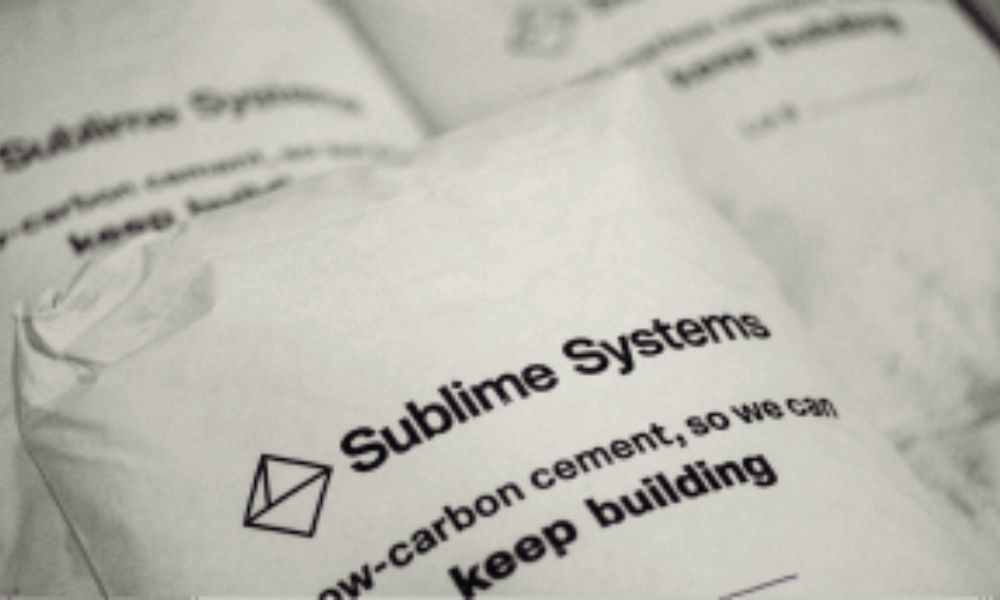
Sublime Systems is reinventing how cement is produced with a mission to decarbonize the $410 billion cement industry globally. MIT Technological Review states that cement is a significant climate risk, with approximately 8% of global greenhouse gas emissions attributed to the industry. Sublime Systems is a pioneering climate tech company revolutionizing cement production with an innovative electrochemical process. This breakthrough technology, powered by electricity instead of fossil fuels, has the potential to reduce cement-related emissions by up to 90% compared to traditional methods.
H2 Green Steel
H2 Green Steel is on a mission to decarbonize the steel industry through innovative production processes that operate on green hydrogen and electricity from renewable sources.
With the construction of what may become the world’s first commercial-scale clean steel factory in Boden, Sweden, H2 Green Steel aims to produce 2.5 million metric tons of steel annually by 2026. Operations are expected to commence towards the end of 2025, featuring an integrated, digitalized, and circular plant design.
XFuel
XFuel is changing how sustainable and low-carbon fuels are produced for road, marine, and aviation transport sectors. The fuel is created by building a modular plant that will help it scale production to develop fuel from marine sludge to waste biomass. The company claims to deliver fuel with an 85% reduction in emissions and eventually carbon-neutral fuels in the future. Using waste biomass and other waste oils helps the production process reduce 145% of greenhouse gas emissions.
Future of climate tech
To combat global warming the world must invest substantially in climate tech. Investment appetite in climate tech solutions is projected to have a positive trajectory through 2024. Climate-caused technologies like artificial intelligence (AI) for analytics, electric vehicles, and petroleum-based product alternatives are coming to the forefront. The industry’s growth will be driven by a better regulatory environment, evolving market dynamics, and growing consumer concerns about climate risks.
The convergence of tech and climate change solutions is a crucial movement towards sustainability and climate resilience. From policymakers to investors, to entrepreneurs, all have a role to play in fostering the growth of climate tech. By supporting these innovations, collectively addressing the challenges of climate change to build a better world for future generations.


