Amazon’s ambitious Zoox robotaxi program received a significant boost this week with the official opening of its first Zoox production facility in Hayward, California. The 220,000-square-foot plant is designed to build over 10,000 purpose-built robotaxis per year, marking a key milestone ahead of the planned commercial rollout in Las Vegas later this year. As investors and consumers track the Zoox robotaxi launch, Amazon is positioning Zoox as a serious competitor to Waymo and Tesla.
This move confirms Amazon Zoox’s shift from testing to manufacturing scale. Alongside the first Zoox plant, the company also continues testing in San Francisco’s SoMa district, prepping for service expansion. With this mass-production push and growing public visibility, the self-driving industry is entering a new chapter where design meets deployment at scale.
The First Zoox Plant: Building at Scale
Zoox’s new production facility in Hayward is its first-ever Zoox production facility, representing a critical leap toward large-scale manufacturing. Reuters reports that this 220,000-square-foot plant can produce more than 10,000 autonomous vehicles annually at full capacity.
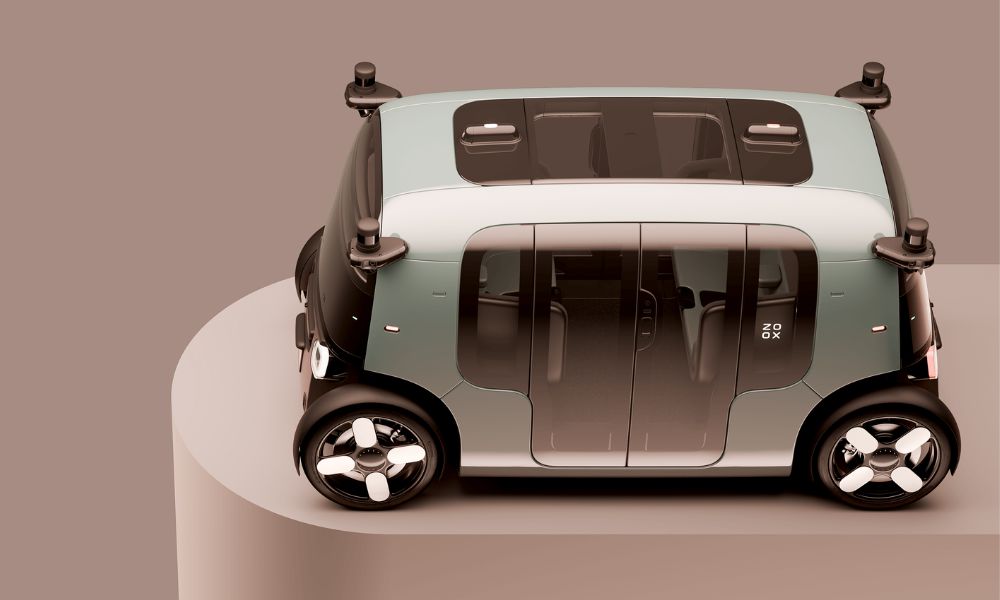
This is not a retrofit operation. Unlike Waymo or Tesla, Zoox builds vehicles from the ground up—steering wheels, pedals, and human-driver systems are gone. Instead, each robotaxi is custom-built as a ride-hailing vehicle from day one. By emphasizing purpose-built design, Zoox aims to deliver a unique suite of autonomous taxis far different from competitors.
Amazon Zoox Robotaxi Launch: From Factory Floor to Public Roads
With the Zoox robotaxi launch calendar in motion, Amazon is targeting cities like Las Vegas and San Francisco for initial service. Hayward’s plant will be the backbone of this rollout. The facility currently produces about one vehicle per day, but is expected to scale dramatically, aiming for three robotaxis per hour by next year.
Once the units roll off the line, they will be deployed in Las Vegas later this year, followed by a planned expansion into San Francisco in 2026. These deployments mark the real-world debut of what begins in Hayward. Zoox’s strength lies in its purpose-built nature: seating for four passengers, bidirectional travel, and no traditional controls. The launch will be a landmark moment for Amazon Zoox robotaxi as a new entrant in public autonomous transit.
The Robotaxi Race: How Zoox Stacks Up
Zoox enters a field with formidable rivals like Waymo already offering paid rides, and Tesla, which plans a “Cybercab” service built on existing vehicle platforms. However, Zoox distinguishes itself by manufacturing bespoke vehicles, marking it as the only company to offer both autonomous software and hardware built in-house.
Scaling Advantages
With an expected factory output of over 10,000 units annually, Amazon Zoox robotaxi aims to meet fleet demand quickly. Waymo has achieved scale earlier, touting over 10 million rides. Tesla’s Cybercab rollout is still pending. Zoox’s ambitions are rooted in this first Zoox plant—place it on a path to close gaps quickly.
Regulatory Hurdles and Field Testing
Despite its progress, Zoox faces safety and regulatory challenges. Internal tests have included a minor collision in San Francisco, leading to voluntary safety upgrades. Critics also cite federal scrutiny over steering configurations and compliance. Zoox’s success depends on managing these issues during and after the Zoox robotaxi launch.
What This Means for the Future of Autonomous Transit
Amazon’s strategy with the Zoox robotaxi goes beyond creating a service; it’s a bet on vertical integration. By building the vehicles themselves, Zoox bypasses supplier dependencies. The first Zoox plant is more than a factory; it’s the foundation for fleet ownership, deployment, and long-term scaling.
For cities and riders, this means appearances of dedicated autonomous vehicles designed not just to drive, but to serve, safety-tested and tailored for ride-hailing. With the robotaxi race intensifying, Zoox is betting on a combination of manufacturing scale, clean design, and urban rollout timing.
A Milestone in Motion
The Zoox robotaxi milestone at Hayward signals a shift from prototype dreams to production reality. Amazon Zoox robotaxi now has a real factory, real cars in testing, and a real timetable for service launches. The Zoox production facility is crucial in separating concept from commercial rollout.
As Zeox approaches the Zoox robotaxi launch in live trials, markets will watch how fast production ramps, how regulators respond, and how riders rate the service. With rivals ahead in user counts, Zoox will need speed, safety, and scalability. But with Amazon’s backing and its first Zoox plant operational, the robotaxi race is unquestionably heating up and Zoox is very much in the mix.