Top CEOs often tell us about their secret to success. Many tend to come from privileged backgrounds, some really show us that you can make it to the top, even when you start from the bottom. For the individuals listed below, their CEO success story started with menial jobs and never-give-up attitude.
Growth is a natural part of life. Everyone desires to develop personally and professionally. While climbing a corporate ladder might not always be easy, it is not impossible. Some of the top CEOs tell us how they managed to reach the top while starting at the bottom rung. Most CEOS also credit their rise to constant innovation and urge people to never stop reinventing themselves. A culture of constant innovation also helps keep your company ahead of the pack.
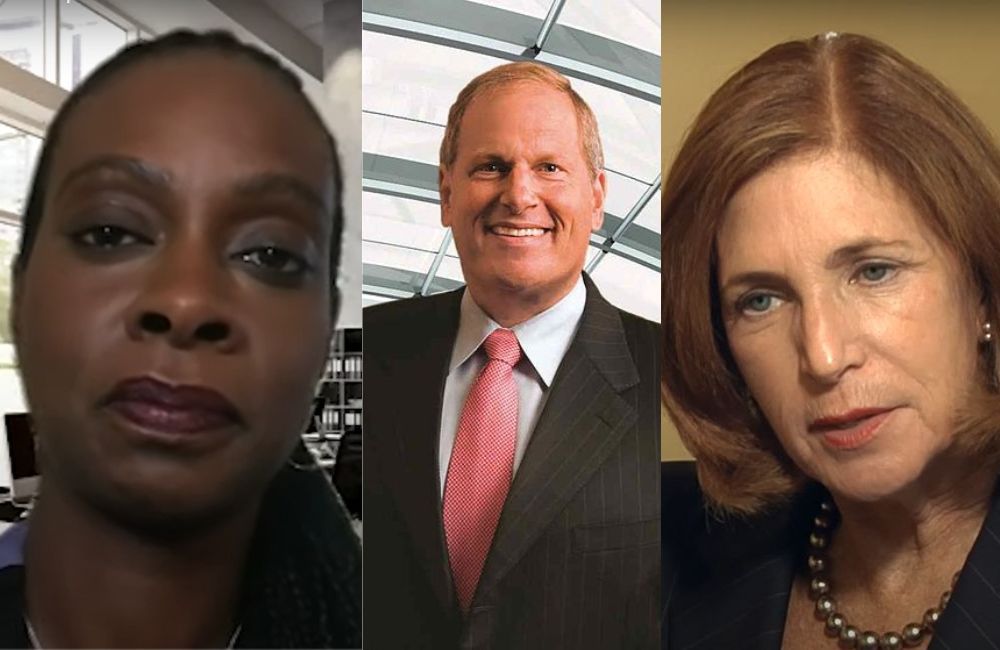
CEO successes: A climb to the top
1. David Cote (CEO of Honeywell from 2022-2017)
At 21, Cote was an hourly employee at the General Electric jet engine plant. He believes that leadership is about respecting the people you work with and letting them know through your actions. A great leader must be able to convince his or her people that they have their backs. Cote gives an example of asking for a certain set of projections regarding ROI while working as a mid-level planner. He tried to convince the team that the CEO Jack Welch would not want it, but ended up asking for it anyway as his team wanted him to. He was reprimanded and Cote thought his job was in jeopardy. Months later, Welch learned that Cote had prioritized the team’s wishes over his own and was impressed with his leadership. Cote was then given a three-level jump to a role that involved managing 200 employees.
2. Chris Rondeau (CEO of Planet Fitness from 2013)
One of the top CEOs of today, Rondeau recommends being fearless when it comes to grabbing opportunities. When he was still in college, he took a job, working part-time at the front desk of Planet Fitness. Later, as the gym expanded he convinced the two founders to sell the atmosphere of the gym over the equipment to attract more people. As he moved up in the company, the founders made him a partner in 2003 and the position of COO. His advice is, “In our industry, it’s easy to become infatuated with the competition. I stay infatuated with the consumer.” Rondeau looks at his journey from the front to the CEO as different levels of schooling. He was made CEO in 2013.
3. Monique Nelson (CEO if UniWorld from 2012)
A trendsetter and a CEO success story, Nelson makes it a point to involve people of color and of different socioeconomic statuses in her work. Entering the corporate world with a sales and marketing job at International Paper at 21, Nelson found that things were not as uniform as she would like. She then wrote up an employee manual to address the various issues she faced. After a move to Motorola, she started working on client management, strategy, and supply chain management. The exposure helped her hone her skills and lead big marketing campaigns. In 2007 she joined UniWorld as a senior account executive before advancing to chairman and CEO. Nelson likes exploring new things and believes that her career has thrived because she makes it a point to give back to the community.
4. Ilene Gordon (CEO of Ingredion from 2009 to 2017)
Gordon started her career as a consultant at the Boston Consulting Group at 23. She reveals that at BCG she learned to advocate for herself and was armed with data to show how she brought value to the company. After she was moved to a profit and loss role, a mentor advised her to get to know, understand, and figure out how to motivate her much older colleagues.
She reveals, “Throughout my career, I’ve stayed true to myself. That meant making choices consistent with my goals. I tried never to lose sight of my priorities: I wanted the corner office. I also wanted a thriving family.”
Gordon mentions that her priority was both work and family. Before joining Ingredion, she was president and CEO of Alcan Packaging. She has been listed on the Forbes Global Game Changers list and was one of FORTUNE’s Most Powerful Women for a number of years.
5. Hans Gieskes (CEO of Cision from 2008 to 2013)
Gieskes’ philosophy is “Don’t overpromise and under-deliver. But do the reverse.” His first job was production coordinator at Mouton Publishers, age 22. Starting out as low-level production coordination helped Giesekes grow into his potential and become a CEO success story. At his first job, he learned the value of asking more questions and doing his research. When he moved to Elsevier, a science publishing company, the company’s chairman mentored him and advised him to withhold judgment with regards to his colleagues.
Gieskes says that ever since he has found that “asking questions is a great way to get people to improve things and accept organizational change.
Currently, he is active as an investor and advisor in the M&A world.
The world’s best CEOs always advise us to be unafraid to fail. What that means can differ from person to person. A Harvard Business Review revealed that CEOs of top companies are reliable, inclusive, and impactful. As leaders in their own right, even without a title, these individuals sought to inspire others and helped people dream more and become more. To become a CEO success example, it is important to see leadership as service to others.