Google has made a breakthrough chip that can solve specific problems in minutes which would take supercomputers a septillion years to solve. This quantum processor chip will make supercomputers less error-prone with more qubits. Google has been working on this chip for more than a decade.
Generally, quantum computers are prone to errors, which means that without any error-correction technology, every one in 1,000 qubits fails, which is the fundamental building block of a computer. This also means that the duration for which qubits remain in superposition to solve equations shortens.
Quantum computers can perform much better than supercomputers but a high error rate remains an issue. That is the only reason research was based on developing quantum computers with less error-prone technologies, not just focusing on more qubits.
Willow Quantum Chip Breakthrough Unveiled
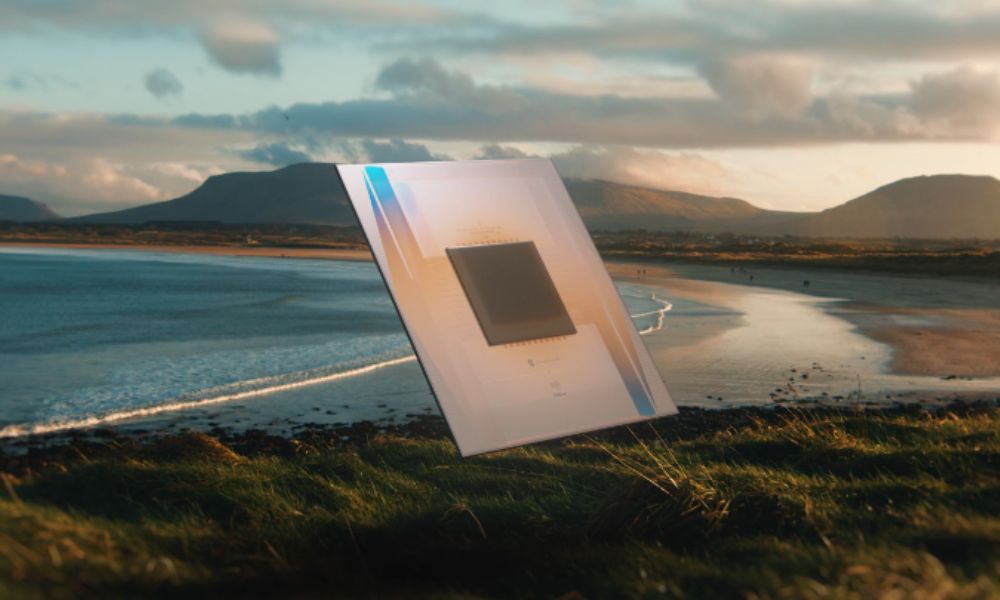
Google has reported that its new quantum processing unit (QPU), named “Willow,” is the first in the world to achieve results that are much below than usual error rate of quantum computers. Peter Sheor, a computer scientist has already outlined it as a “below threshold” rate in his journal “Nature,” published on December 9, 1955 paper.
Achieving the breakthrough “below threshold” refers to less error-prone computers as you add more qubits. This chip will clear the path for quantum machines in the future. The technology will be relying on the logical qubit. The logical qubits will be encoded using the data of all the physical qubits in a lattice formation. All the physical qubits and single logical qubits will have the same share of data. For instance, if any qubit has some error or fails, the calculation will continue as the logical qubit already has the same data.
Google Achieves Major Quantum Computing Milestone
The Google Scientists were able to build reliable qubits for error reduction by making several shifts. They improved machine learning algorithms to identify errors, calibration protocols, and device fabrication methods. Scientists prominently improved the coherence times while maintaining the ability of physical qubits to tune to give their best performance.
Julian Kelly, Google Quantum AI’s Director said, “What we’ve been able to do in quantum error correction is a really important milestone — for the scientific community and the future of quantum computing — which is [to] show that we can make a system that operates below the quantum error correction threshold.”
Google’s Willow Quantum Chip Wows Elon Musk
Google’s willow quantum chip impresses Elon Musk. Sundar Pichai, Google, and Alphabet CEO, posted on X, “Introducing Willow, our new state-of-the-art quantum computing chip with a breakthrough that can reduce errors exponentially as we scale up using more qubits, cracking a 30-year challenge in the field.”
Elon Mush, Space X founder, responded with “Wow,” and a short conversation happened between both the CEOs, they agreed to do a quantum cluster in space with the starships.
The Willow quantum chip marks a transformative leap in quantum computing by significantly reducing error rates, solving problems once thought insurmountable. Google’s achievement paves the way for future advancements in quantum technology, potentially revolutionizing industries. As quantum machines become more reliable, the vision of harnessing quantum power for real-world applications inches closer, opening new possibilities for science, business, and even space exploration.