Hyundai Motor announced it is to introduce the cheapest compact electric car in Japan. As per the South Korean automaker Hyundai, the reason to launch the compact EV in Japan is to infiltrate the market as it is predominately taken over by the local giants with established petrol and hybrid vehicle technologies.
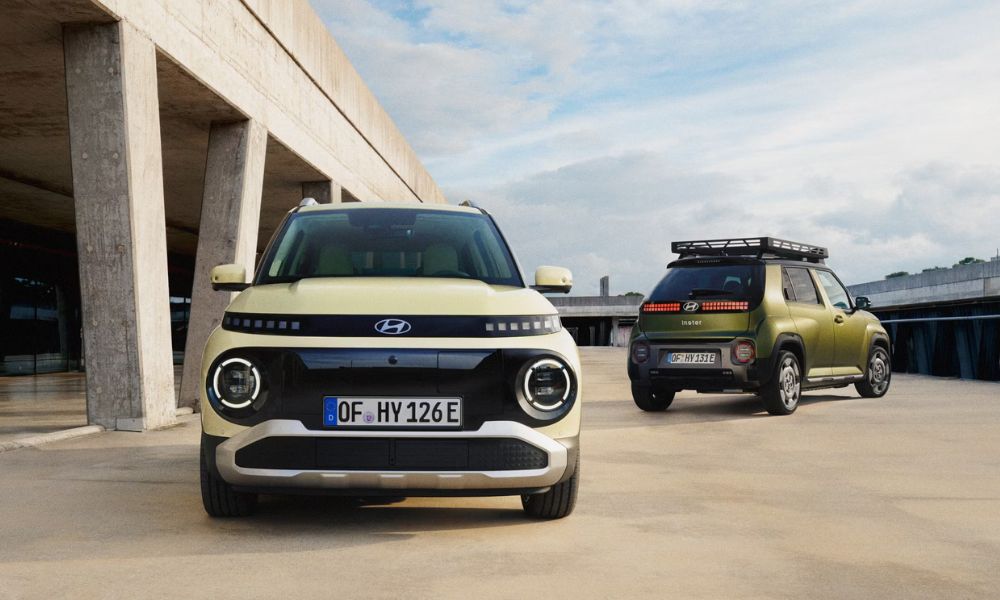
Launching its compact EV Inster in Japan Hyundai follows attempts by other foreign brands like Tesla and other foreign brands to enter a country that is yet not adapted to the electric vehicles. Hyundai is following Chinese automaker BYD’s strategy of infiltrating the marker with budget friendly EV.
Hyundai compact EV
The entry level price of Hyundai Inster is $18000 (2.85 million yen). A model price tag making it the lowest priced EV to enter Japan. The price of $18000 would be even lower than the 3.63 million yen BYD set in 2023 with its Dolphin.
Hyundai’s plan for Europe
Inster, which made its debut in Europe last year after launching in South Korea as Casper Electric, will be delivered to Japanese customers starting around May, Hyundai Mobility Japan CEO Toshiyuki Shimegi said at a news conference during the Tokyo Auto Salon motor show.
Slow demand for EV in Japan
In the Japanese ultra-compact, limited-power “kei car” category, Nissan Motor’s Sakura is sold at 2.60 million yen and is the most popular EV in the country.
But even Sakura had fewer than 23,000 sales last year, down nearly 40% from 2023, an industry tally showed, highlighting the lack of popularity of EVs in a Japanese passenger car market that has roughly 4 million annual vehicle sales.
Last year, Hyundai sold only 607 vehicles in Japan, while BYD sold 2,223. Tesla did not disclose its Japan sales.
Hyundai’s Strategy for Japan launch
Shimegi said, “Inster is our core product to win Japanese customers’ recognition,” adding that it help Hyundai meet its goal of boosting Japan sales tenfold in the next five years.
The automaker Hyundai, which forms world’s third-largest auto group with Kia, re-entered Japan’s passenger car market in 2022 with only electric and fuel cell vehicles, after exiting in 2009. The exit was majorly due to low sales in a country dominated by local Toyota Motor, Honda Motor and other Japanese auto majors.
Hyundai stock update
Hyundai motors stock closed at 2,25,500 KRW up 2,500 by 5.87% today