Rebranding is a common practice in the life cycle of many companies, whether it’s a minor change in logo or an entire shift in business strategy. Some companies are successful in making the transition while others fail drastically. So far, the Jaguar rebrand controversy tells us, in no uncertain terms, that consumers are not in favor of the direction taken by Jaguar.
Luxury car manufacturer Jaguar unveiled its modernist branding for its shift towards becoming an electric-only brand. From the change in its iconic feline logo to its decision to have the text take the form of “JaGUar,” the company has made some dramatic changes to its identity.
Jaguar’s divisive rebranding campaign shows the company’s pride in its new, eclectic identity, but the response to it has been largely negative, especially considering the lack of an actual car that could show how the campaign would translate into an actual product.
The Jaguar Rebrand Is Entrenched in Controversy—Consumers Are Not Impressed
The Jaguar 2024 branding changes were announced on November 18, 2024, and almost immediately, those who saw the campaign were left confused by the direction taken by the company. Jaguar’s modernist branding comes with the tag of “Delete Ordinary” and “Copy Nothing,” which the company claims is a way to recapture the ethos of founder Sir William Lyons, who led the brand with an aim to be unique and original.
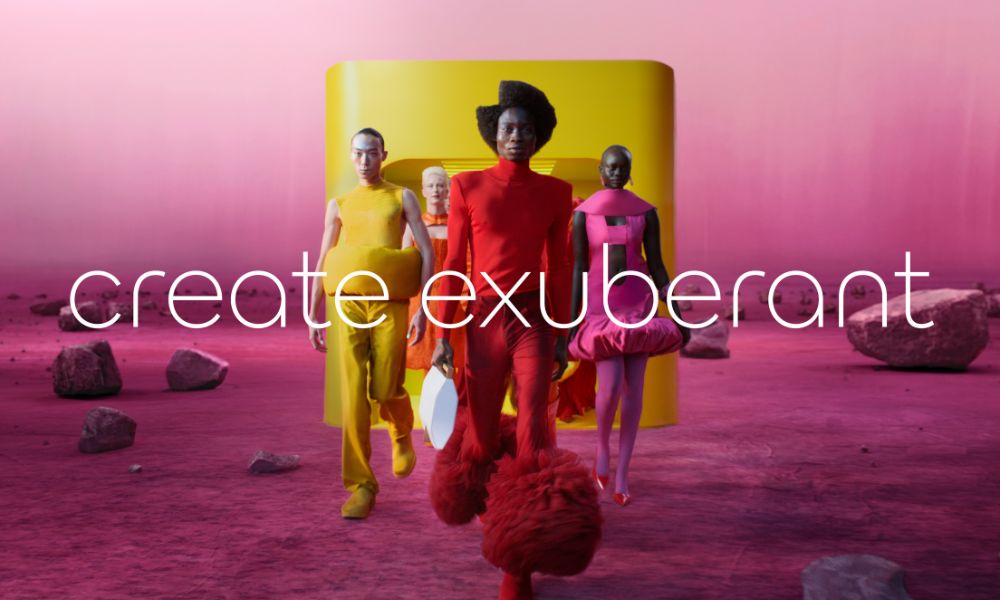
Jaguar referred to the campaign principle of Exuberant Modernism, embracing a bold look through the colorful visuals that accompanied the announcement. The company referred to the exuberant colors as a central part of its new brand identity going forward.
Jaguar Sheds Old and Iconic, for New and Electric
Jaguar’s new device mark showcases a more spaced-out logo and it is written as “JaGUar” which it states is a “powerful celebration of modernism – geometric form, symmetry, and simplicity – demonstrating the unexpected by seamlessly blending upper and lowercase characters in visual harmony.”
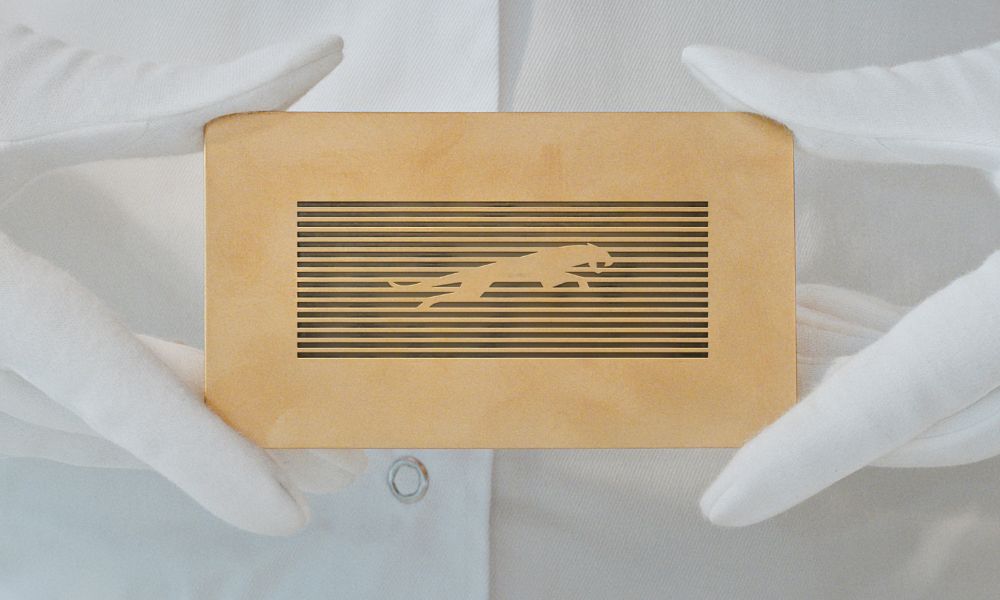
The trademark symbol of a leaping jaguar has been retained, but only in a sense. The big cat is considerably more angular now, its silhouette outlined by a rectangle of lines. The other growling Jaguar head has been replaced by a “JJ” symbol that is minimalist at heart.
“To bring back such a globally renowned brand we had to be fearless. Jaguar was always at its best when challenging convention. That ethos is seen in our new brand identity today and will be further revealed over the coming months. This is a complete reset. Jaguar is transformed to reclaim its originality and inspire a new generation. I am excited for the world to finally see Jaguar.”
—Rawdon Glover, Managing Director, Jaguar
All of these changes suggest that the company is attempting to entirely divest itself of its historic brand identity and this was confirmed by Managing Director Rawdon Glover, who said that the decision to take the company’s new cars off sale was an intentional move to create a barrier between the old and new models.
Why Is the Jaguar Campaign Receiving Backlash?
While the unusual rebranding was confusing to many, what really stumped auto enthusiasts was the lack of an announcement regarding upcoming cars or even graphics or schematics that could depict the EV-centric cars they could expect to see in the next few years. It’s known that Jaguar is switching to the electric market more fully than competitor brands like Ferrari, who are only making a partial switch, but it is still unclear how this will take shape.
The Jaguar rebrand controversy also stems from the fact that many see the campaign as being too “woke” as they believe the imagery focuses on diversity and androgyny to gain approval rather than saying much else about the cars. It is apparent that the brand is no longer looking to sell to those who might have stayed loyal to the old identity and is instead in search of an entirely new target audience that may or may not exist.
With its declining sales over the years and the prolonged wait until 2026 to begin selling anything again, the company’s campaign could be the final nail in its coffin. However, despite the negativity currently surrounding the rebrand, this is the most attention the company has received in a while and could lead to a successful shift to an entirely new audience.
On December 2, 2024, at Miami Art Week, Jaguar is setting up a public installation to further depict and explain the new brand. After the significant investment in the current campaign, it is unlikely that Jaguar will backtrack on its rebranding to present something different, however, this event could be a key factor in getting the public more comfortable with its new identity.
The result of the event and the company strategy over the next year to keep audiences engaged will be critical in determining how the brand grows from here on.