TSMC outlook snipped leading to its shares falling. Taiwan Semiconductor Manufacturing Co. (TSMC) shares fell the most in more than five months after cutting its outlook and postponing production at TSMC Arizona project to 2025, underscoring the challenges of expanding abroad during a protracted electronics market slump.
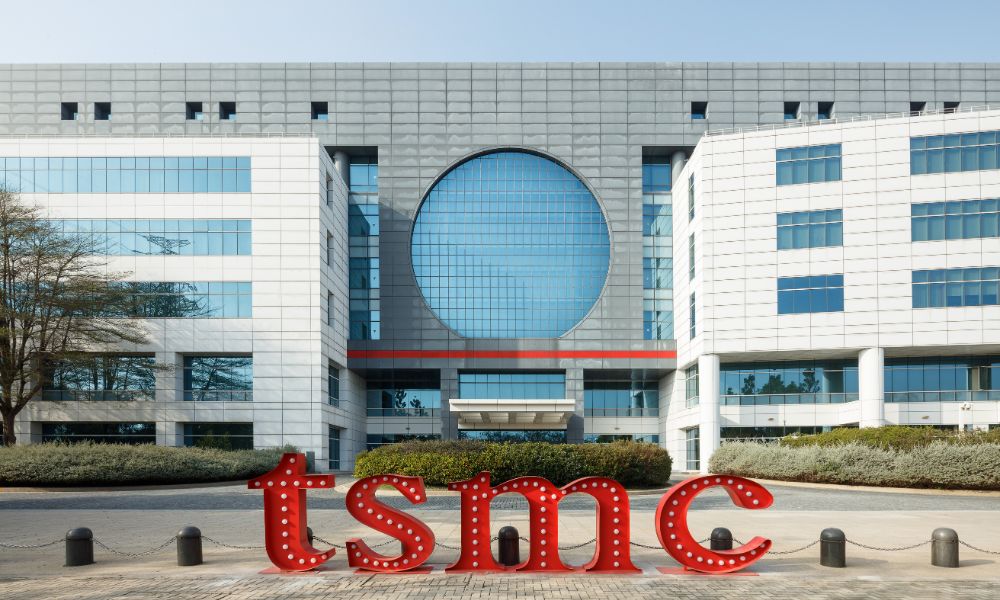
TSMC outlook
TSMC chip maker is the main vendor for Apple Inc. and NVIDIA Corp. TSMC shares fall as much as 3.8% during early trading in Taipei after TSMC’s market value fell while projecting a 10% fall in sales this year, versus previous guidance for a single-digit decline. Shares in chip firms Tokyo Electron Ltd. and ASML Holding NV, TSMC chip maker’s primary gear suppliers, fell in Europe and Asia. Memory chipmakers Samsung Electronics Co. and SK Hynix Inc. also fell in Seoul, while NVIDIA declined more than 3% in the US.
The delay in the U.S., a consequence of a lack of skilled American workers and ballooning costs underscores the difficulties in making chips there as Washington strives to reduce a global reliance on Asian-based supply.
TSMC shares fall
TSMC chip maker’s surprise cut in 2023 revenue projections suggests a post-Covid electronics slump may persist, offsetting a surge in demand for high-end chips for AI development. TSMC’s market value had climbed close to 30% this year, before Friday’s slide.
“This is the third cut to its revenue outlook that TSMC has made this cycle,” Needham analysts wrote in a research note. That “may disappoint some bulls, but we see the lack of inventory rebuild through year-end will set up the company for strong growth in 2024.”
Delivery of TSMC outlook was after posting its first quarterly profit decline in four years, underscoring the extent of a global slide in smartphone and PC demand. It reported a 23% slide in net income to NT$181.8 billion ($5.85 billion). Executives said capital intensity a measure of the pace at which TSMC buys or invests in capital equipment will slow in coming years.
Executives on Thursday said they were also pushing back the anticipated start of output from TSMC Arizona’s mew plant to 2025. President Joe Biden’s administration has made development of domestic chip production a top strategic priority, backed by subsidies in the Chips and Science Act that may top $50 billion. As the US clashes with China, American politicians have been concerned about the vulnerability of Taiwan, which Beijing has claimed as its own territory.
TSMC analysis
TSMC chipmaker’s lower sales target for 2023 suggests a deeper-than-expected downturn in smartphone chips and end-market handset demand. Despite a surge in N3 node orders for Apple’s new line of iPhones and an uptick in AI chip-related production, TSMC projects full-year sales will drop by 10%, double its guided 5% decline in April.
To mitigate concerns from customers over geopolitical uncertainties in the Taiwan Strait, an investment of upto $40 billion to create two fabs in at TSMC Arizona plant to diversify its manufacturing footprint and constructing a $8.6 billion facility in Japan with government’s help.
The hiccups in TSMC Arizona however call into question whether TSMC can make chips abroad as efficiently as back home.
“We are working on improving this by sending skilled technical workers from Taiwan to the U.S.,” TSMC Chairman Mark Liu said.