Volkswagen is considering whether to close factories in Germany for the first time in its 87-year history. Volkswagen is considering plant closure, is a move that shows the impact of mounting price pressure amid rising competition from China’s EV makers.
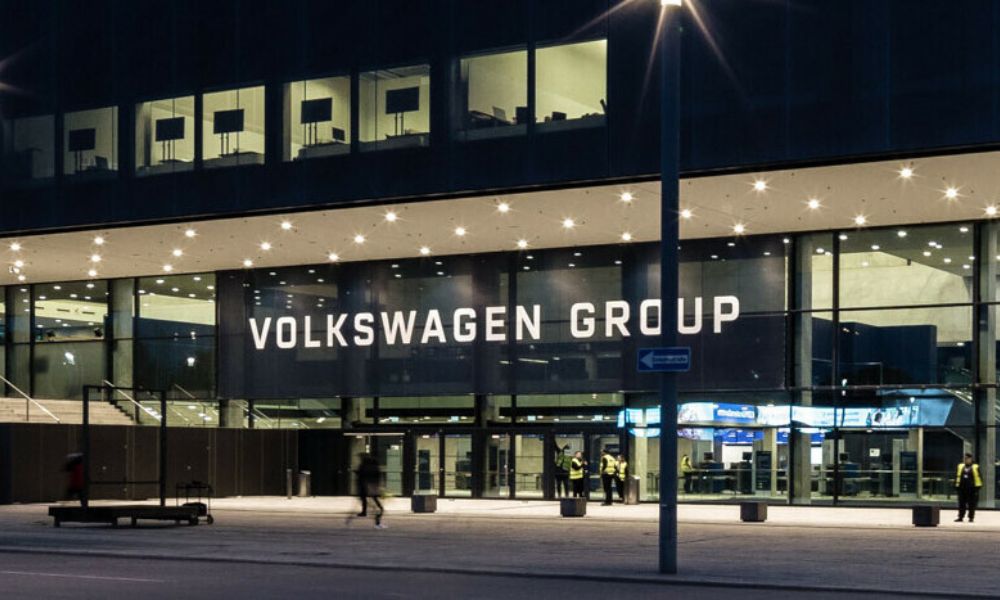
In a statement on Monday, Volkswagen, one of the world’s biggest car companies, said that it could not rule out plant closures in its home country. Other measures to “future-proof” the company include trying to terminate an employment protection agreement with labor unions, which has been in place since 1994.
VW plant shutdown
Monday’s move of Germany factory closure marks the first major clash between Chief Executive Oliver Blume, who analysts have described as more of a consensus builder than his often combative predecessor Herbert Diess, and unions that command substantial influence at VW.
VW considers one large vehicle plant and one component factory in Germany to be obsolete, said its works council as it vowed “fierce resistance” to the executive board’s plans.
Chief Financial Officer Arno Antlitz will speak to staff alongside Volkswagen brand chief Thomas Schaefer at a works council meeting on Wednesday morning.
Volkswagen’s works council head Daniela Cavallo, a member of the powerful IG Metall union, said she expects CEO Blume to get involved in negotiations too. She added that the Wednesday’s meeting would be “very uncomfortable” for the group’s management.
Analysts have in the past named VW sites in Osnabrueck, in Lower Saxony and Dresden, in Saxony, as potential targets for closure. The state of Lower Saxony is Volkswagen’s second-largest shareholder and on Monday supported its review.
End of job security programme
Volkswagen, which employs around 680,000 staff, said that it also felt forced to end its job security programme, which has been in place since 1994 and prevents job cuts until 2029, adding all measures would be discussed with its works council.
IG Metall says the job security covers Volkswagen plants in Wolfsburg, Hanover, Braunschweig, Salzgitter, Kassel and Emden.
“The situation is extremely tense and cannot be overcome by simple cost-cutting measures,” Schaefer said in a statement.
VW’s cost-cutting drive
VW, which drives most of Volkswagen’s unit sales, is the first of its brands to undergo a cost-cutting drive targeting 10 billion euros ($11 billion) in savings by 2026 as it attempts to streamline spending to survive the transition to electric cars.
Challenging landscape for Volkswagen
A difficult economic environment, new rivals in Europe, and the falling competitiveness of the German economy meant Volkswagen needed to do more, Blume told its management.
It faces a challenging landscape of challenges in Europe, the U.S. and especially China. It has lost more stock value than any major competitor over the past two years.
Germany’s economy ministry said VW management must act responsibly within a challenging market environment, but declined to comment specifically on planned cuts.
IG Metall said the decision “shakes the foundation” of Volkswagen, which is Germany’s largest industrial employer and Europe’s top carmaker by revenue.
Losing market share in China
Volkswagen, which embarked on a €10 billion ($11.1 billion) cost-cutting effort late last year, is losing market share in China, its single biggest market. In the first half of the year, deliveries to customers in that country slipped 7% on the same period in 2023. Group operating profit tumbled 11.4% to €10.1 billion ($11.2 billion).
The lackluster performance in China comes as the company loses out to local EV brands, notably BYD, which also pose an increasing threat to its business in Europe.
Stock update
Volkswagen, whose shares closed 1.2% higher after the news, has lost almost a third of its value over the past five years, making it the worst performer among major European carmakers.